

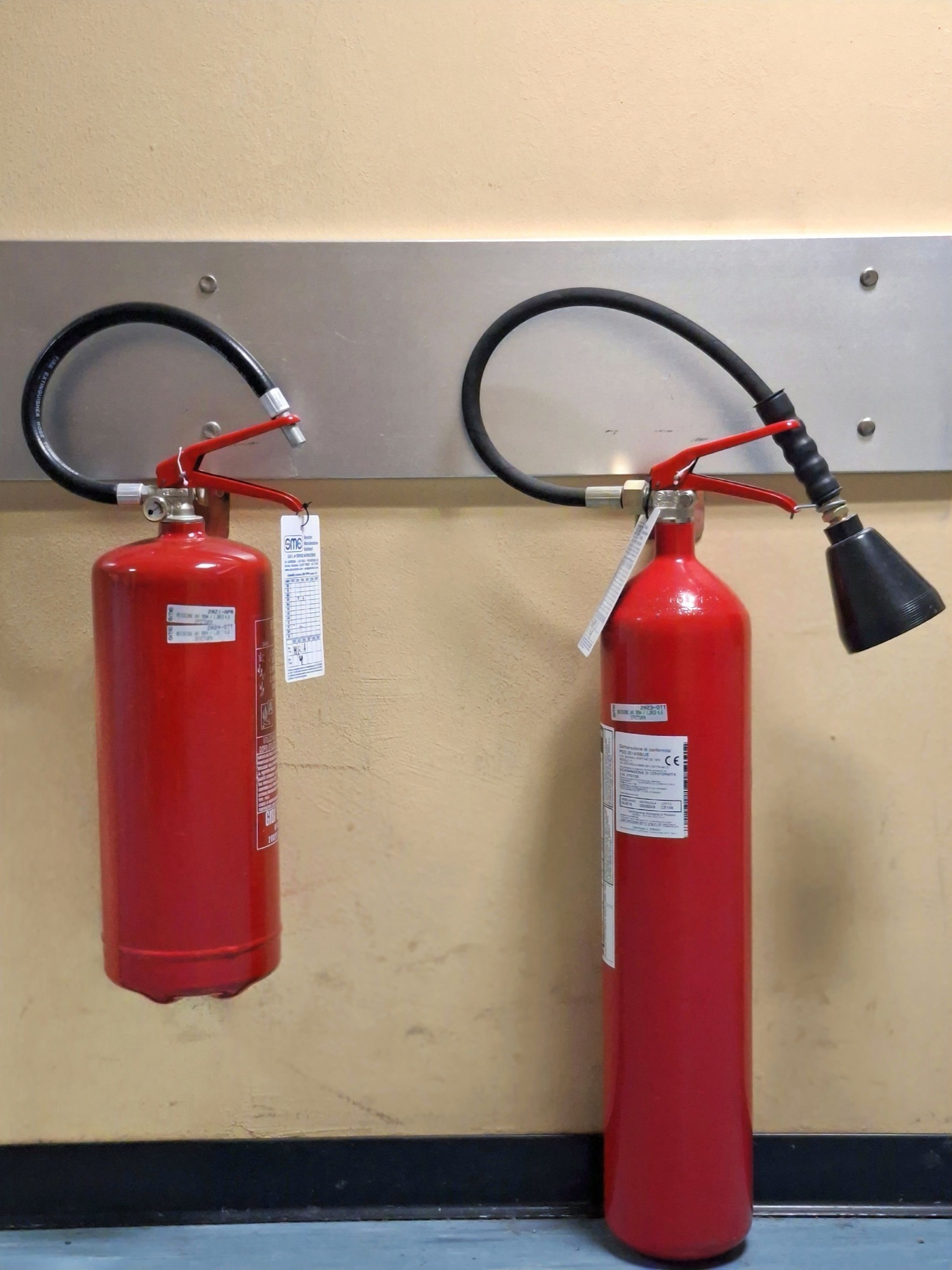
ABC dry powder extinguishers
The general-purpose extinguisher for mixed-risk areas — rated for solids, liquids and gases. Supply, mounting, signage, annual service and refilling.
- Practice
- IS 15683 · IS 2190
- Typical use
- Offices, societies, shops, plant
- Service
- Annual · refill · hydro-test
One unit that covers the three classes you actually meet
ABC dry powder is mono-ammonium phosphate, and it works on Class A solids, Class B flammable liquids and Class C gases. That range is why it is the default extinguisher in a corridor, a society lobby, a shop or a workshop: whoever picks it up does not have to identify the fire class first, which is a realistic thing to design around.
It is not the right unit everywhere. Powder is messy and mildly conductive when damp, so a server room or a switchboard gets CO₂ or clean agent instead, and a commercial kitchen gets wet chemical. Placement, unit size and the mix of types across a floor come out of a survey against the risks on it — which is what the fire officer is checking when he walks the building.
Supply is the small part of this. The unit has to be mounted at the right height on the escape route, signed so it can be found, logged, checked at the interval, refilled after any use and pressure-tested on its cycle. We do that under an annual contract, with a service record per unit, because an extinguisher nobody has looked at for four years is a compliance problem rather than a fire precaution.
Sizes and what each one is for
Capacities we supply, with the duty each is normally selected for. The mix across a floor comes from the survey, not from a single size everywhere.
Tell us about the project
Send the drawings or the BOQ and we will price it line by line. Most enquiries start with a site visit, because the site decides the system — not the catalogue.