

Automatic sprinkler systems
A grid of heads across the whole floor plate, each one its own detector and its own nozzle. Hydraulic design, supply, installation, testing and commissioning.
- Scope
- Survey → commissioning → AMC
- Practice
- IS 15105 · NBC 2016 Pt.4
It puts the water where the fire is, and nowhere else
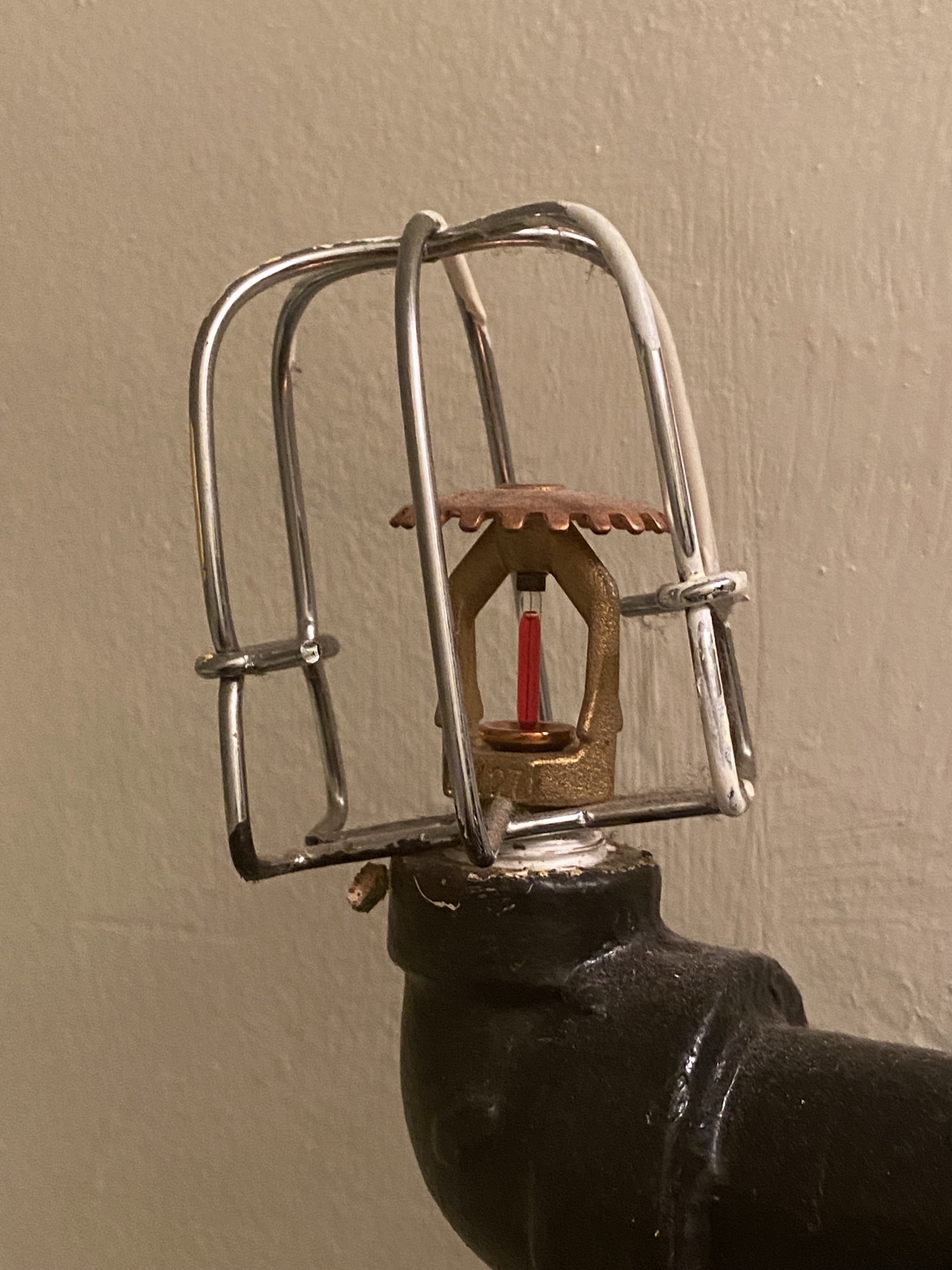
A sprinkler head is a detector and a nozzle in one object. Its glass bulb holds the water back until the air around that head reaches its rated temperature, so only the heads over the fire open — which is why a real sprinkler activation usually means one or two heads and a wet patch of floor, not a flooded building.
Design starts with the hazard classification of each area, because that sets the density of water the grid has to deliver and the area it has to deliver it over simultaneously. From there the pipe sizes, the head spacing and the pump duty follow by hydraulic calculation rather than by rule of thumb. We prepare those calculations and the layout drawings for consultant and fire-brigade approval before ordering, since a change after the pipework is up is expensive.
Installation is coordinated against the ceiling: the grid has to clear ducts, trays and beams while every head keeps the clearance it needs to throw properly, and a head boxed in by a later false ceiling is a head that will not work. Commissioning is witnessed at the installation control valve — flow test, alarm valve, flow switch to panel — and the as-built drawings and head schedule are handed over with the system.
What the installation is built from
The equipment list for a typical wet-pipe sprinkler grid. Heads are selected per area — a pendant head over an office and a sidewall head in a corridor are not interchangeable.
Tell us about the project
Send the drawings or the BOQ and we will price it line by line. Most enquiries start with a site visit, because the site decides the system — not the catalogue.